In Serbia, faith isn’t just practiced in churches; it is woven into the very fabric of the landscape, the history, and the daily lives of its people. The Serbian Orthodox Church, an autocephalous (self-governing) Eastern Orthodox body, has served as the guardian of the nation’s identity through centuries of triumph and turmoil.
You cannot talk about Serbian Orthodoxy without mentioning Saint Sava (1175–1235). The youngest son of Grand Prince Stefan Nemanja, Sava turned away from a life of royalty to become a monk. He eventually secured the independence of the Serbian Church in 1219.
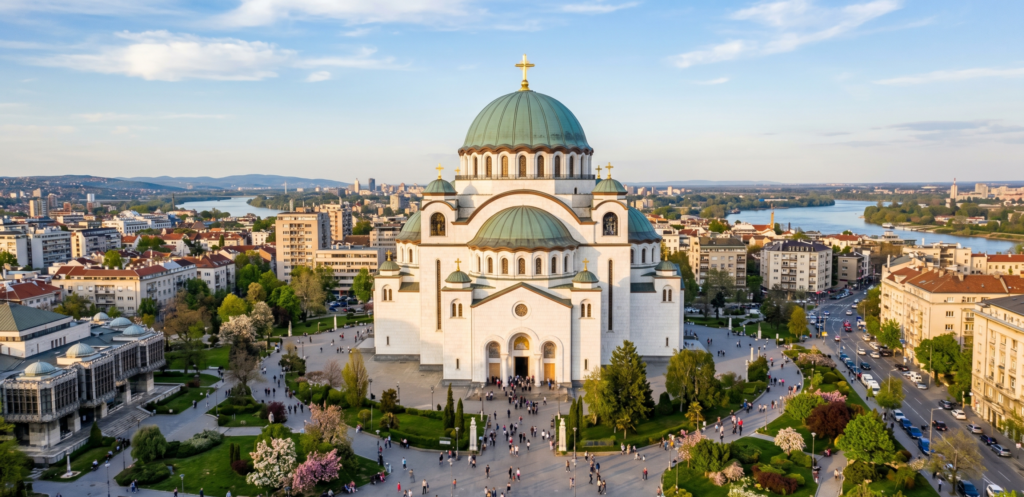
Today, the Church of Saint Sava in Belgrade stands as a testament to his legacy. It is one of the largest Orthodox churches in the world, famous for its mesmerizing gold-leaf mosaics and its massive dome that defines the Belgrade skyline.
Serbia is home to hundreds of monasteries, many of which are protected by UNESCO. These aren’t just buildings; they are medieval “time capsules” of art and spirituality.
One aspect that makes Serbian Orthodoxy unique in the Christian world is the Slava. While most Orthodox Christians celebrate their “Name Day” (the feast of the saint they were named after), Serbians celebrate a family patron saint.
Did you know? The Slava is passed down from father to son and is so central to Serbian culture that it was inscribed on UNESCO’s Representative List of the Intangible Cultural Heritage of Humanity.
Today, the Church remains the most trusted institution in Serbia. Beyond the historical monuments, you will find a living faith—from the quiet, candle-lit vigils in Belgrade’s St. Mark’s Church to the remote mountain hermitages where monks still live a life of prayer and labor.